

Crafting a luminous sanctuary requires more than flipping switches. Thoughtful illumination accentuates architecture, uplifts mood, and transforms everyday routines into cinematic moments. Whether you’re designing a cozy reading nook or a grand entertaining space, these lighting home design tips will guide you toward radiant success. Prepare to dive into a kaleidoscope of strategies that blend form, function, and a dash of uncommon flair.
1. Master the Three-Tiered Lighting Matrix
Great illumination hinges on balancing three layers: ambient, task, and accent.
- Ambient Lighting provides general illumination—think ceiling-mounted fixtures, recessed cans, or pendant clusters.
- Task Lighting zeroes in on functional zones: under-cabinet strips for kitchen counters, desk lamps for workstations, and reading sconces by chairs.
- Accent Lighting spotlights architectural elements or art—picture lights, wall grazers, and track-mounted spotlights.
A well-curated interplay of these layers is the cornerstone of lighting home design tips, ensuring each corner is both practical and picturesque.
2. Select Bulbs Like a Sommelier Chooses Wine
Not all bulbs are created equal. Evaluate three critical metrics:
- Color Temperature (Kelvin):
- Warm (2,700–3,000 K) for cozy living rooms and bedrooms.
- Neutral (3,000–4,000 K) for kitchens and bathrooms.
- Cool (4,000–5,000 K) for work areas and garages.
- Color Rendering Index (CRI):
- A CRI of 90+ reveals true hues, vital for art studios, makeup mirrors, and kitchens.
- Luminous Flux (Lumens):
- More lumens equate to brighter spaces. Replace watts with lumens when shopping.
Investing time in bulb selection is among the most fundamental lighting home design tips to avoid harsh or dimly lit environments.
3. Embrace Dimmer and Smart Controls
Dimmers deliver flexibility. They let you modulate brightness for breakfast tasks or candlelit dinners. For ultimate control, integrate smart home systems:
- Zoned Dimming: Assign different areas—dining versus living—to individual dimmers.
- Scene Presets: Program “Morning Glow,” “Movie Mode,” or “Entertain” scenes via a touchscreen or mobile app.
- Voice Activation: Issue commands like “Dim dining lights to 40%” through smart speakers.
By layering granularity into control, you adhere to elevated lighting home design tips, maximizing both ambiance and energy savings.
4. Harness the Allure of Natural Daylight
Natural light uplifts and conserves energy. Optimize every shaft of sunshine:
- Window Placement: If remodeling, consider clerestory windows or floor-to-ceiling glazing on south-facing walls (in northern latitudes) for winter warmth.
- Reflective Surfaces: Glossy backsplashes, glass tabletops, and polished stone amplify daylight through specular bounce.
- Skylights & Solar Tubes: Introduce sunbeams into windowless cores—hallways, bathrooms, and closets.
A daylight-centric approach stands among the most biophilic lighting home design tips, nurturing circadian health and saving on utility bills.
5. Choose Statement Fixtures with Panache
A light fixture can be the jewelry of a room. Select sculptural pendants, chandeliers, or sconces that resonate with your design ethos:
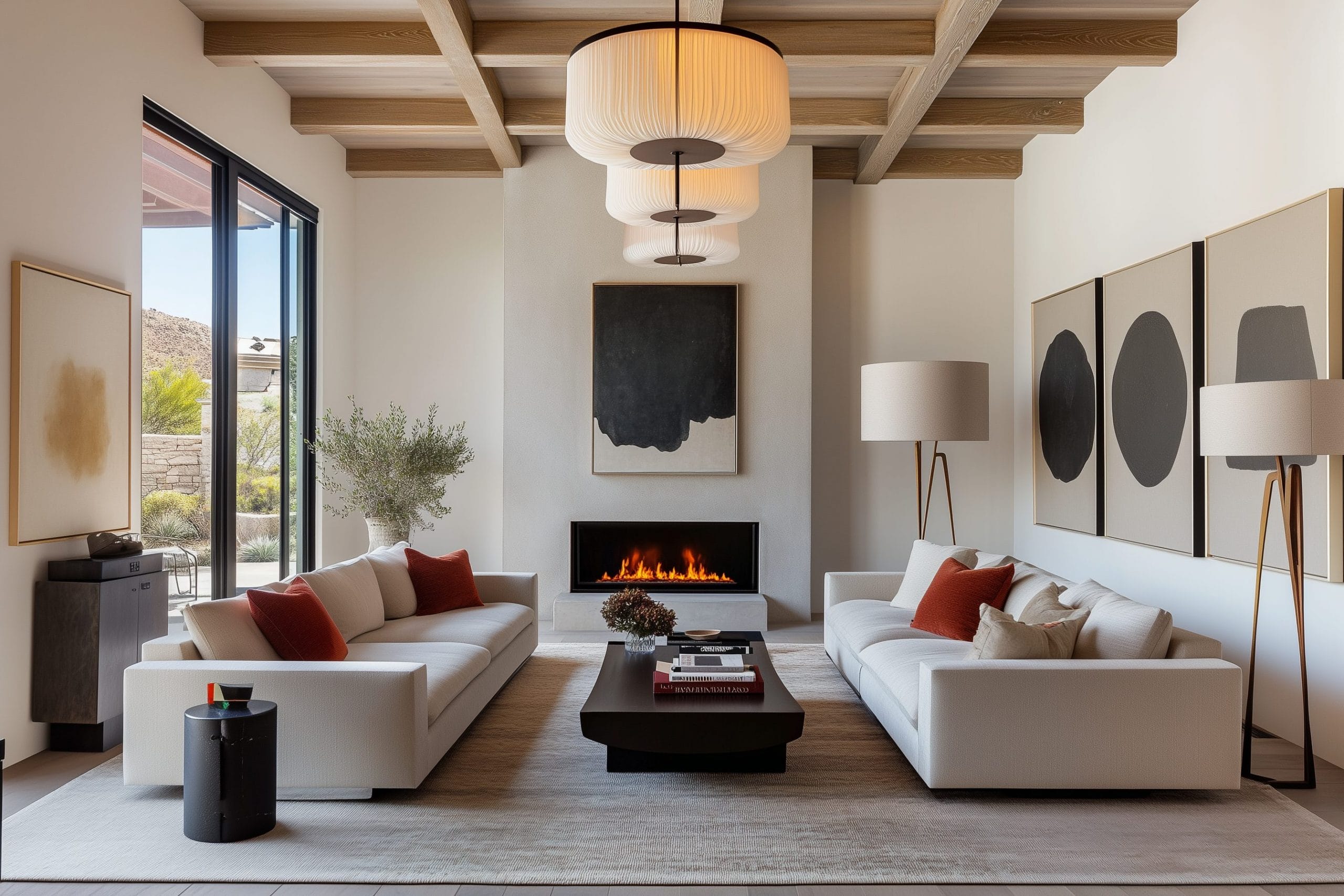
- Scale & Proportion: A chandelier should occupy about half the width of a rectangle dining table. In a foyer, size it to cover roughly two-thirds of the ceiling height.
- Contrasting Materials: Pair a wrought-iron pendant with a velvet headboard, or a glass orb chandelier over a rustic wood island.
- Unexpected Silhouettes: Seek designs inspired by molecular structures, wandering vines, or asymmetrical patinaed metal.
Stmt fixtures anchor spaces and epitomize aspirational lighting home design tips by fusing art and utility.
6. Map Out Lighting Zones for Fluid Functionality
Divide open-plan layouts into luminous clusters:
- Kitchen Work Triangle: Illuminate sink, stove, and prep counters with dedicated task lights.
- Living Room Ensemble: Combine a central ambient source with a trio of floor lamps to create conversation circles.
- Bedroom Retreat: Use sconces flanking the bed, adjustable for reading, alongside soft overhead light.
Mapping zones ensures each activity receives dedicated illumination—an essential tenet of lighting home design tips that promotes both comfort and efficiency.
7. Showcase Architectural Features with Grazing and Uplighting
Accentuate textures and volumes by playing with shadows:
- Wall Grazing: Place linear LED strips or pinnacles close to textured walls—plaster, stone, or wood slats—to cast dramatic chiaroscuro.
- Uplighting: Recess floor-mounted uplights at the base of columns or cabinets to create a floating effect.
- Cove Lighting: Conceal strips in ceiling coves to emit diffuse, sky-like illumination.
These techniques transform mundane surfaces into cinematic vistas, elevating any curated roster of lighting home design tips.
8. Layer Color with Tunable and Color-Changing LEDs
Gone are the days of fixed hues. Explore dynamic lighting:
- Tunable White: Shift from a crisp 6,500 K (daylight) to a cozy 2,200 K (sunset) depending on time and activity.
- RGB/ARGB Fixtures: Infuse accent zones—bookshelves or bar areas—with ever-shifting mood lighting.
- Wall Washers: Deploy programmable color fields that dance across vertical planes.
Harness color to dictate atmosphere—another avant-garde entry in progressive lighting home design tips.
9. Illuminate Art and Décor with Precision
Treat artwork and objets d’art as gallery-quality installations:
- Picture Lights: Choose adjustable arm sconces with rotatable heads to avoid hot spots.
- Mini Track Systems: Install micro-tracks above a feature wall, using narrow-beam 10° or 25° spotlights.
- Shadowless Recesses: Embed LED modules flush with 3D wall panels to generate directional focus.
Focused accent lighting transforms personal collections into immersive lighting home design tips statements.
10. Integrate Reflective and Translucent Materials
Marry light with unique surfaces for prismatic effects:
- Mirrored Panels: Segment a wall with beveled mirrors to multiply both daylight and lamp glow.
- Translucent Stone: Backlit onyx or alabaster panels diffuse a soft, gem-like luminance.
- Iridescent Finishes: Shell inlays or mica-infused paints shimmer under changing light angles.
These material pairings underscore the alchemy of lighting home design tips, where light meets texture in scintillating harmony.
11. Employ Decorative Lamps for Nooks and Crannies
Small corners deserve big ideas:
- Plug-In Sconces: Wire-free options that clamp onto shelves or hook over frames—ideal for renters.
- Tabletop Lanterns: Battery-powered LED lanterns with dimmable dials for portable ambiance.
- Floor Uplighters: Slim pillars tucked behind sofas to create soft wall glows.
Accent lamps define micro-environments, constituting tactical lighting home design tips for any square footage.
12. Illuminate Outdoor Spaces for Safety and Drama
Extend your design sensibility beyond four walls:
- Pathway Bollards: Low, mushroom-shaped fixtures guide movement while imparting garden allure.
- Up-Lit Foliage: Spotlights nestled at tree bases project filigreed leaf patterns onto ceilings or walls.
- String Lights and Lanterns: Globe or Edison bulbs strung across pergolas impart festive enchantment.
Thoughtful exterior lighting ensures your home dazzles by day and night, rounding out comprehensive lighting home design tips.
13. Choose Energy-Efficient Technologies
Conservation and cost savings needn’t compromise style:
- LED Retrofits: Modern LEDs consume up to 85% less energy and last 25× longer than incandescent bulbs.
- Smart Scheduling: Automate off-peak usage and “vacation mode” routines.
- Daylight Harvesting Sensors: Dim or extinguish fixtures when ambient light suffices.
Eco-conscious selections weave sustainability into your lighting home design tips, benefitting both planet and pocket.
14. Embrace Adjustable Fixtures for Future Flexibility
Adaptability preserves relevance as needs shift:
- Articulating Arms: Swing-arm wall lamps that pivot for reading or accent use.
- Track Lighting: Relocate heads, swap beams, and adjust angles without rewiring.
- Modular Pendant Grids: Universal canopy plates allow repositioning of pendants without ceiling patchwork.
Invest in systems that evolve—an advanced strategy among dynamic lighting home design tips.
15. Accent Ceilings and Floors with Recessed Lines
Extend illumination beyond walls:
- Perimeter Cove Lights: Concealed around ceiling edges to emulate floating planes.
- Linear Floor Inlays: Recess LED strips into threshold strips or along baseboards for a runway effect.
- Stairway Niche Lights: Integrate treads with LED modules for safety and style.
These boundary treatments articulate crisp lines of light, elevating any lighting home design tips playbook.
16. Cultivate Layers of Shadow and Depth
Don’t banish shadows entirely—they grant form definition:
- Low-Angle Wall Grazers: Emphasize surface ridges by casting elongated shadows.
- Multiple Overlapping Sources: Combine direct and reflected light to sculpt dimensionality.
- Soft Backlighting: Place diffused LEDs behind furniture or art for a halo effect.
Strategic shadowing balances brightness, yielding an elegant chiaroscuro that distinguishes refined lighting home design tips.
17. Prioritize Maintenance and Accessibility
Keep fixtures pristine and functional:
- Removable Diffusers: Simplify cleaning to maintain light quality.
- Accessible Drivers and Drivers: Position transformers in accessible cabinets.
- Modular Replaceability: Choose systems where individual LEDs or modules can swap out without professional help.
Long-term upkeep is an often-overlooked facet of lighting home design tips that preserves your luminous investment.
18. Integrate Lighting as Architectural Element
Marry structure and illumination:
- Light-Emitting Walls: Embed LEDs behind perforated panels for a luminous façade.
- Glow-In-Fill Materials: Utilize photoluminescent aggregates in terrazzo flooring to store and emit light at dusk.
- Backlit Furniture: Lucite-topped bars and translucent side tables that glow from within.
When light and architecture fuse, you manifest visionary lighting home design tips that blur the line between art and infrastructure.
19. Experiment with Scale for Dramatic Effect
Venture beyond typical fixture sizes:
- Oversized Pendants: Hang globes equal to 1.5× the width of a dining chair’s seat.
- Miniature Chandeliers: Use micro fixtures in clusters—three small pendants above a coffee table.
- Linear Bars: Project long, slender LEDs across kitchen islands or hallway vaults.
Playing with scale injects theatricality, one of the boldest lighting home design tips in your repertory.
20. Final Flourish: Craft a Cohesive Lighting Narrative
All successful designs tell a story. Map your luminous saga:
- Define Moods: Identify zones—“energize,” “focus,” “relax”—and assign fixtures accordingly.
- Sequence Moments: Transition from bright, clear task flooding to soft, celebratory accent as evening progresses.
- Enforce Consistency: Harmonize finish palettes—brass, nickel, blackened steel—for a unified visual language.
By orchestrating a coherent narrative, you transcend mere utility and achieve radiant mastery—the ultimate goal of lighting home design tips. Illuminate with intention, celebrate the interplay of lumens and shadows, and let each glow underscore the personality of your space.