

Home Design Inspiration from Nature’s palette is boundless. From the iridescent shimmer of a dragonfly’s wing to the fractal geometry of fern fronds, the natural world offers an inexhaustible trove of design cues. Embracing nature inspired home design not only imbues interiors with timeless beauty, but also promotes well-being, productivity, and a profound sense of harmony. Ready to let Mother Earth lead your next renovation? Here’s an extensive guide—complete with short bursts of insight and expansive considerations—to help you forge a dwelling that feels as rejuvenating as a forest bath.
1. Embrace Biophilic Principles
Biophilia—our innate affinity for living systems—is the cornerstone of nature inspired home design.
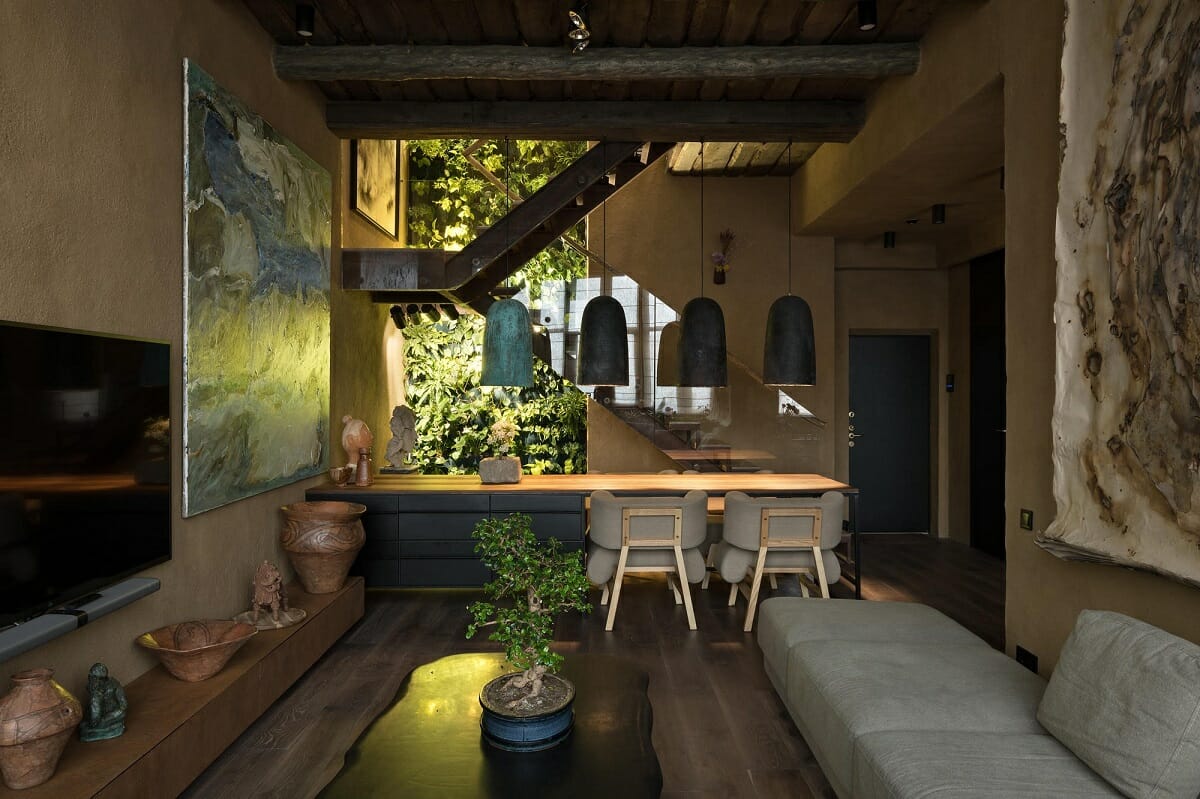
- Direct Experience of Nature: Large windows, indoor plants, living walls, and water features.
- Indirect Experience of Nature: Natural textures, botanical motifs, and fractal patterns.
- Space and Place Conditions: Prospect and refuge (lookout points with cozy alcoves), transitional spaces that mimic forest edges.
By integrating these principles, spaces resonate on a subconscious level, reducing stress and enhancing cognitive function.
2. Infuse Organic Forms and Curvilinear Lines
Rigid angles give way to sinuous curves.
- Dendritic Patterns: Furniture legs branching like tree limbs.
- Phyllotactic Swirls: Spiral motifs on tile layouts or wall art inspired by sunflower heads.
- Biomorphic Furniture: Tables shaped like river pebbles; sofas with undulating armrests.
Subtle curves cultivate a protean fluidity, inviting movement and mimicking the supple forms found in nature.
3. Harness a Natural Color Palette
Earth tones evoke geological and botanical elements.
- Terracotta and Umber: Evoke sun-baked canyon walls.
- Mossy Greens and Olive Hues: Channel woodland understories.
- Sky Blues and Cloud Whites: Convey expansive airiness.
- Stone Grays and Slate Charcoals: Ground the design in mineral stability.
Strategic pops of ochre or vermilion—like wildflowers amid grasslands—add exuberant contrast.
4. Select Materials with Low Embodied Energy
Sustainable sourcing aligns with ecological ethos.
- Reclaimed Timber: Barnwood or driftwood planks impart patina.
- Bamboo and Cork: Rapidly renewable, lend edaphic warmth.
- Natural Stone and Slate: Durable, with variegated veining that echoes riverbeds.
- Clay Plaster and Earthen Finishes: Provide hygroscopic regulation and a tactile, earthy finish.
These materials celebrate geological time scales while minimizing carbon footprints.
5. Integrate Living Green Walls and Vertical Gardens
Vertical verdure transforms blank walls into living canvases.
- Modular Plant Panels: Easy-to-install cells for ferns, succulents, and ivies.
- Irrigation Micro-Drip Systems: Ensure consistent hydration without manual fuss.
- Air-Purifying Species: Pothos, peace lilies, and English ivy filter indoor air.
A verdant tapestry not only enlivens but also improves acoustics and humidity balance.
6. Maximize Daylighting and Scenic Prospect
Natural illumination fosters circadian rhythms and reduces energy consumption.
- Clerestory Windows: Introduce high-angle daylight deep into interiors.
- Light Shelves and Reflectors: Bounce sunlight onto ceilings, diffusing glare.
- Skylights and Solar Tubes: Bring sunbeams into interior cores.
- Frameless Glass Doors: Blur boundaries between indoor and outdoor.
Position seating and workstations to enjoy panoramic views and the diurnal dance of light.
7. Water Features for Tranquil Soundscapes
The murmur of water engages the senses and drowns urban noise.
- Indoor Fountains: Stone basins with gentle cascades.
- Wall-Mounted Rills: Slim channels of water that trickle vertically.
- Plunge Pools and Reflecting Basins: Courtyard installations for contemplative repose.
Their edaphic hum fosters a meditative ambiance, centering body and mind.
8. Patterning with Fractals and Tessellations
Repeating, self-similar patterns echo the order found in:
- Fern Fronds and Romanesco Broccoli: Fractal iterations translated into wallpaper or rugs.
- Honeycomb Tessellations: Hexagonal tiles on floors or backsplashes.
- Leaf Vein Networks: Laser-cut metal screens that filter light with botanical precision.
Such motifs resonate with the brain’s predilection for natural patterns, instilling calm.
9. Earthy Textures for Tactile Richness
Texture elevates visual design into a multisensory experience.
- Handwoven Textiles: Wool throws, jute rugs, and hemp curtains.
- Rough-Hewn Stone Walls: Exposed aggregate or stacked fieldstone veneers.
- Polished Concrete Floors: With integrated mica aggregates for a subtle sparkle.
- Terracotta Planters: Weather over time, gaining an authentic patina.
Blend coarse and fine textures to create a compelling sensory palimpsest.
10. Adaptive Outdoor-Indoors Transition
Seamlessly merge patio and interior realms.
- Retractable Glass Walls: Open wide to patios or gardens.
- Level Thresholds: Eliminate steps to unify flooring materials.
- Covered Verandas: Extend living rooms with pergola-shaded seating.
- Weather-Resistant Fabrics: Performance textiles for al fresco cushions.
This continuum encourages an immersive nature inspired home design ethos.
11. Seasonal Rotation of Organic Accents
Just as ecosystems evolve, so should décor.
- Spring Blossoms: Cherry or magnolia branches in earthenware vases.
- Summer Botanicals: Potted herbs like rosemary and basil for scent and cooking.
- Autumnal Foliage: Dried grasses, wheat stalks, or ornamental gourds.
- Winter Evergreens: Sprigs of fir, cedar cones, and holly berries.
Each seasonal vignette reinforces your bond with nature’s calendrical rhythms.
12. Fossil and Mineral Displays
Cultivate a cabinet of curiosities.
- Ammonite Spirals: Shelled seductions from deep time.
- Geode Slices: Crystalline cores that refract light.
- Agate Coasters and Bookends: Layered translucence with striations of color.
- Petrified Wood: Stony timbers that recall ancient forests.
These specimens bridge prehistoric epochs and modern interiors.
13. Implement Earth-Sheltered and Passive Designs
Kinetic comfort with minimal resource use.
- Earth Berming: Embed building façades into sloping terrain for thermal mass benefits.
- Green Roofs: Sedum mats that insulate and mitigate stormwater runoff.
- Operable Shading Devices: Adjustable louvers that respond to solar azimuth.
- Thermal Chimneys: Stack-effect ventilation towers that draw warm air upwards.
Such features root homes literally and figuratively into the landscape.
14. Sustainable Water and Waste Systems
Holistic stewardship of resources.
- Rainwater Harvesting: Roof gutters feeding underground cisterns.
- Greywater Recycling: Redirect shower and sink effluent to irrigation lines.
- Composting Toilets: Convert organic waste into soil amendments.
- Permeable Paving: Gravel or permeable pavers that recharge groundwater.
Resource circularity underscores the ecological integrity of nature inspired home design.
15. Vernacular Architecture and Contextual Sensitivity
Local traditions offer time-tested wisdom.
- Adobe and Cob Construction: Earth-based methods tuned to arid climates.
- Timber Framing and Tatami Layouts: Japanese prototypes that emphasize modularity and minimalism.
- Stilted Homes: Raised on pilings to navigate flood plains or tropical humidity.
- Thatch and Shingle Roofs: Regional materials that reflect cultural identity.
Adopting vernacular idioms fosters authenticity and climate-appropriate performance.
16. Artisanal Craftsmanship and Local Artisans
Handmade elements lend provenance and soul.
- Hand-Carved Timber Beams: Unique striations and tool marks.
- Woven Baskets from Indigenous Weavers: Each pattern tells a cultural narrative.
- Pottery Glazes Mixed On-Site: Subtle color variations render every vessel singular.
- Forged Iron Hardware: Blacksmith artistry for door pulls and railings.
This human touch elevates design beyond mass-produced uniformity.
17. Mindful Lighting with Natural References
Glow that mimics sunrise and sunset.
- Warm LED Spectra: Tunable white lights that trace the sun’s arc.
- Salt Lamps and Ember Lamps: Diffuse orange radiance akin to campfire embers.
- Skylight Tubes: Guide pinpoint beams of daylight into darker areas.
- Lantern-Style Fixtures: Paper or woven shades that evoke firefly lanternings.
A circadian-aligned lighting scheme completes the biophilic cycle.
18. Integrate Wildlife-Friendly Landscaping
Support local fauna adjacent to your home.
- Pollinator Gardens: Native wildflowers that nourish bees and butterflies.
- Bird Baths and Feeders: Ceramic basins and wooden feeding stations.
- Bat Boxes and Bee Hotels: Encourage nocturnal and solitary pollinators.
- Pond Ecosystems: Native aquatic plants and stone shelves for amphibians.
Your dwelling becomes part of a living ecosystem, not an isolated artifact.
19. Sensory Layering with Sound, Scent, and Touch
Multisensory immersion deepens connection.
- Wind Chimes with Bamboo Tubes: Soft percussive tones on gentle breezes.
- Aromatic Wood Panels: Cedar or sandalwood wall cladding that emits faint fragrance.
- Tactile Pathways: Pebble inlays or river-stone flooring for barefoot exploration.
- Plant-Infused Hydrosols: Misting ferns’ natural essences into air.
These dimensions forge an environment that transcends mere optics.
20. Final Flourish: An Ecosystem of Design
A home is most successful when it functions like a micro-ecosystem—each element interdependent.
- Synergistic Systems: Rain gardens that cleanse runoff feed plantings nourished by greywater.
- Seasonal Adaptability: Operable wings and partitions that respond to temperature and light.
- Iterative Evolution: Allow spaces to mature, decay, and renew like a living forest.
By heeding nature’s rhythms—its cycles of growth, decay, and regeneration—you foster a dwelling that breathes, blossoms, and sustains, epitomizing the essence of nature inspired home design.